
Packaging, Labels & the Circular Economy
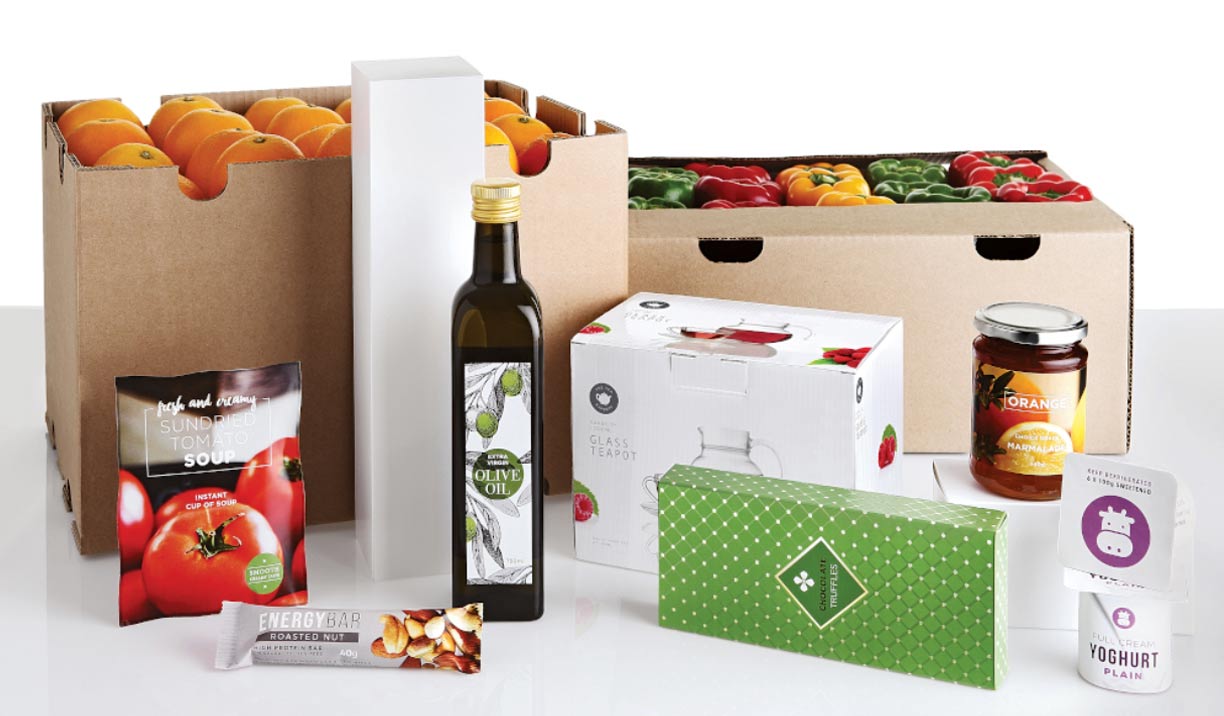
Importance of labels and packaging in the circular economy
Since the industrial revolution, we have been living in an economy based on taking, making and wasting. This is the Linear Economy. It operates in a straight line from resource extraction to manufacturing, to the end of a product’s life. We take resources from the Earth, make products and then discard them when we are done. We have operated as if resources are endless, but they are not. They are finite. As resources grow scarce, the linear approach is faltering. It is being replaced by a new approach based on circular thinking.
Circular thinking aims to design out waste and pollution, keep materials in use longer and regenerate the natural environment. When a product is designed, decisions are made that lead to waste and pollution. If a product is designed with the Circular Economy as a guiding principle, waste and pollution can be eliminated. Circular design means choosing materials that last longer and can be recovered at end of life for recycling and re-use. Design can close the loop on waste. Ultimately, circular thinking can design products to enrich the natural environment rather than deplete it.
Design must reach beyond the product itself. The packaging that carries a product must also be considered. Packaging differentiates one brand from another. Packaging protects a product, extends its shelf-life and communicates valuable information to the consumer. In circular thinking, packaging must be reduced and redesigned, so it contributes to a closed-loop system. Packaging must be retrievable, recyclable, compostable and reusable. In June 2021, over 100 leading companies signed a call for EPR (Extended Producer Responsibility) legislation to ensure manufacturers design packaging consistent with the circular economy.
Label material selection in the circular economy
Labels are an important element in package design. If the packaging is designed to be recycled, the label must be produced from materials that recycle with it. If the packaging is designed to biodegrade, the label must biodegrade with it. If the package is designed for re-use, the label must be re-usable or it must remove cleanly and have its own end of life plan. The label must not become a contaminant in the circular process.
There are a wide range of label materials designed to ensure the label enhances the overall packaging goals.
FSC certified label stock – FSC is the World’s most trusted sustainable forest management solution. FSC certified paper products come from forests that are responsibly managed, socially beneficial, and environmentally conscious.
Recycled and Recyclable label material – Labels materials are available that are made from up to 100% recycled content. When this material is paired with a repulpable adhesive, the result is a label that can be recycled on its own or along with the package it has been applied to.
Compostable and Biodegradable Labels – These materials meet the requirements for industrial composting and are safe for indirect food contact. This combination of features makes them ideal for sustainable food packaging.
Plant-Based Films – These materials offer the durability and water-proof features of traditional plastic films but they are produced from renewable, wood-based resources rather than fossil-based materials
BPA and Phenol free labels – Bisphenol A (BPA) is a phenol-based substance used in a wide range of consumer products including direct thermal paper and labels. Long-term BPA exposure has been linked to several health conditions, such as prostate and breast cancer. It may also be a contributing factor to developing reproductive problems and autism. A wide range of label materials exists that is free from these toxins.
Chlorine-free / Unbleached material – Chlorine-free paper is an environmentally preferable alternative to paper bleached with chlorine. Chlorine and its derivatives (such as chlorine dioxide)—the most common bleaching agents used by the pulp and paper industry—are harmful to the environment. Unbleached paper saves the environment from the addition of dioxins and other harmful chemicals.
Wash away labels – PET containers are used for a wide range of food and beverage containers. Wash-off label material is designed to work with the recycling process used for these containers as per the guidelines set by the Association of Plastic Recyclers (APR).
Thin labels materials – Thin paper face-stock, combined with reduced coat-weight adhesive and thin liner film, resulting in a thinner raw material that requires fewer resources to produce, package, ship and store. There are also more labels per roll which results in less change-over-time in the application process.
Label liner waste in the circular economy
Most of the label material options in the marketplace share the fact that they deliver labels on silicone coated paper, commonly referred to as liner. Liner represents roughly 50% of the raw material used in the production of a label and yet, in almost all cases, it is sent to landfill after use. Approximately 380,000 tonnes of liner is landfilled annually in North America. This approach represents linear thinking.
Revolution Label exists to change this. Revolution Label collects used liner, recycles it and uses it to produce new liner and new labels. It is a closed loop system designed to keep liner out of landfill and bring labelling into the circular economy.
Participating companies collect waste liner in specific containers which are collected for recycling. Liner waste is mixed with water. A precise high-consistency pulping process disintegrates the paper while minimizing breakdown of the silicone and other contaminants.
This makes it easier for Revolution Label’s proprietary process to separate silicone from fibre.
Fibres are screened and washed to remove impurities
A multi-stage de-watering process thickens the fibres and prepares them to become new paper stock.
Discarded liner becomes rolls of new paper, ready to make new labels or liners.
Revolution Label produces all of the label options a brand needs and simultaneously supports its customer’s participation in the circular economy.
Revolution Label is the circular economy’s labelling partner.
Give us a call at 1-800-485-6849
Contact Us
Imagine the massive volume of release liners that are being landfilled every year. Now picture all this material being recycled in a closed loop system... it's an attainable vision.
We are thrilled to be offering an innovative ZERO WASTE solution for label liner.
Thank you for considering eco-friendly shipping solutions!
Call Toll-Free: 1-800-485-6849 or
Email: nowaste@revolutionlabel.ca
Above & Beyond Sustainability
Revolution Label product materials come from responsibly managed forests
All of your orders are processed with clean and green energy! We are proud to have a zero impact website powered by clean, pollution-free energy with Bullfrog Power.

